
Bang Rak sits along the eastern bank of the Chao Phraya River in central Bangkok, anchored by the Saphan Taksin BTS Station - one of the most strategically useful transit points in the city. Staying here puts you within a short BTS ride of Silom, Siam, and the riverside ferry piers, without the premium rates of Silom itself. This guide compares two 3-star hotels in Bang Rak to help you decide which one matches your travel priorities.
What It's Like Staying in Bang Rak
Bang Rak is a mixed-use district where old Sino-Portuguese shophouses sit next to office buildings and riverside hotels. Saphan Taksin BTS Station is the neighborhood's transit backbone - from here, you can reach Siam Square in under 15 minutes or hop on the Chao Phraya Express Boat to reach the Grand Palace without navigating Bangkok's traffic. The area is not a tourist bubble; it functions as a working Bangkok neighborhood, which means mornings are busy with commuters and the street food scene is genuinely local rather than curated.
Patpong Night Market is around 2 km north along Silom Road, and the riverside promenade near Asiatique is accessible by ferry. Foot traffic drops noticeably after 10 PM, making it a quieter overnight base than Sukhumvit or Khaosan Road, though that also means fewer late-night dining options within walking distance.
Pros:
- Direct BTS access at Saphan Taksin puts Silom and Siam within 10-15 minutes without a taxi
- Riverside location gives access to ferry routes, cutting across Bangkok's traffic entirely
- Lower hotel rates than equivalent properties in Silom or Sathon
Cons:
- Limited walkable nightlife and restaurants after 9 PM compared to Sukhumvit
- Some streets lack footpaths, making evening walks uncomfortable
- Distance from the main tourist cluster around Khaosan Road requires at least one transit connection
Why Choose a 3-Star Hotel in Bang Rak
Three-star hotels in Bang Rak offer a functional middle ground between budget guesthouses and the polished business hotels that dominate nearby Silom. In this district, a 3-star property typically delivers air-conditioned en-suite rooms, daily housekeeping, and free Wi-Fi at rates that run around 30% lower than comparable rooms in the Silom core. Room sizes at this tier in Bang Rak generally range around 20-25 m2, which is standard for Bangkok's inner districts - not spacious, but workable for a 2-4 night city stay.
The trade-off at this category is consistency: amenities like pools or on-site gyms are not guaranteed, and breakfast is not always included in the base rate. What you get instead is a reliable, clean base with transit access and enough on-site facilities to avoid daily inconveniences. For travelers prioritizing location and value over luxury touches, Bang Rak's 3-star options are logistically strong and underpriced relative to their central position.
Pros:
- Meaningfully cheaper than Silom 3-star equivalents, with similar transit access
- Core amenities - Wi-Fi, air conditioning, private bathroom - consistently covered at this tier
- On-site restaurants at some properties reduce dependency on street navigation for meals
Cons:
- Pools and fitness facilities are not standard at this price point in Bang Rak
- Room sizes are compact by international 3-star standards
- Breakfast is typically charged separately or not offered
Practical Booking & Area Strategy
The most strategically positioned streets in Bang Rak for 3-star stays are those within a 10-minute walk of Saphan Taksin BTS Station and Charoen Krung Road - this corridor keeps you connected to the Silom Line while staying within reach of the riverside piers on Soi Charoen Krung 42-44. If your itinerary includes the Grand Palace, the Chao Phraya ferry from Sathorn Pier (adjacent to Saphan Taksin) is faster than any taxi during peak hours and costs a fraction of the price.
Bang Rak sees a notable uptick in hotel demand between November and February, when Bangkok's cool season brings international visitors. Booking around 6 weeks in advance for a November-January stay in this district is advisable, as the limited 3-star inventory fills faster than in larger hotel clusters like Sukhumvit. Outside peak season - particularly April through August - last-minute rates can drop significantly, making Bang Rak an even stronger value proposition. Key nearby attractions include the Assumption Cathedral on Charoen Krung, the Artist's House at Khlong Bang Luang, and the riverside dining stretch near Asiatique The Riverfront, which is one ferry stop south.
Best 3-Star Hotels in Bang Rak
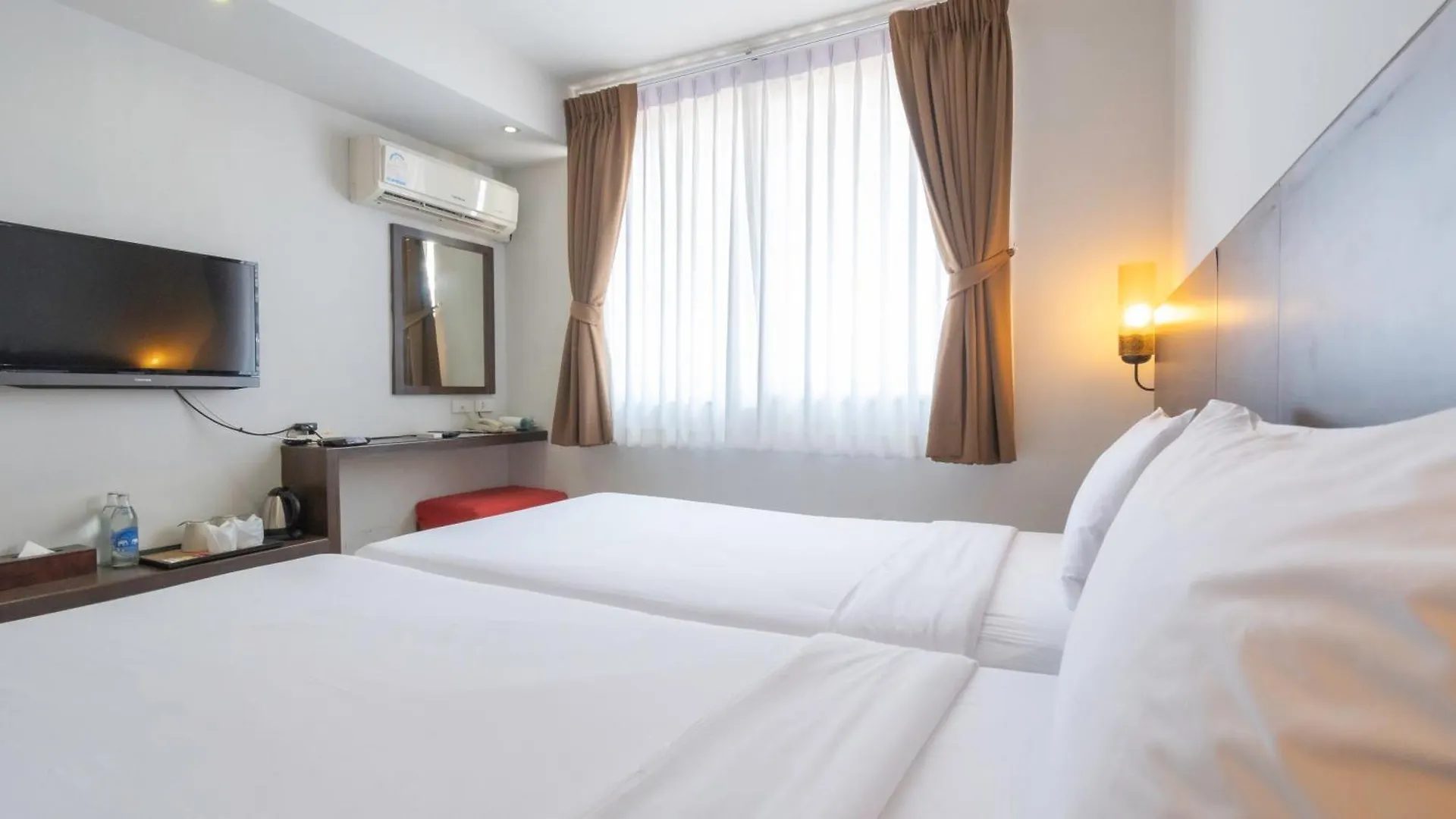
Both hotels below are located in the Bang Rak district and represent the main 3-star options available in this area. They differ in facilities, positioning, and the type of stay they support.
-
1. Pas Cher Hotel De Bangkok
Show on map


 Check-infrom 14:00 until 23:59Check-outfrom 01:00 until 12:00
Just a few rooms left at the best rate!
fromTHB 1175
-
2. Metro Hotel
Show on map


 Check-infrom 14:00 until 23:59Check-outuntil 12:00
Hurry – almost gone at this price!
fromTHB 1044
Smart Travel & Timing Advice for Bang Rak
The clearest window for staying in Bang Rak at the best price-to-comfort ratio is between late October and early December - you get the beginning of the cool season with noticeably fewer crowds than January and February, when international tourism in Bangkok peaks. Hotel rates in Bang Rak can rise around 25% from December through February, so booking a stay in November gives you cooler temperatures and more room to negotiate or find availability at the 3-star level.
April is Bangkok's hottest month (regularly above 35°C) and coincides with Songkran Festival, which drives up demand across the city - Bang Rak is not exempt, and last-minute availability at this tier disappears quickly during that week. For most visits, 3 nights is the practical minimum to cover the Silom corridor, the Chao Phraya riverside, and at least one day trip to the Grand Palace or Chatuchak via BTS. Staying fewer nights rarely allows enough time to take advantage of Bang Rak's transit connections without feeling rushed. Outside Songkran and Chinese New Year, last-minute bookings in June through August can yield good rates, as this is Bangkok's lower-demand wet season - Bang Rak's covered streets and indoor dining options make rain less disruptive here than in more open-air districts.

